


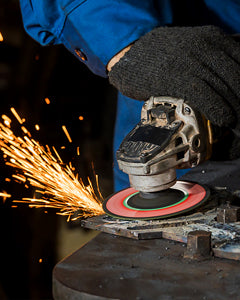

In this guide, Fermi Abrasives explains how diamond sanding belts work, their main industrial applications, and how to select the right abrasive belt for your grinding requirements.
Choosing the right industrial abrasive belt involves more than selecting an abrasive type. Workpiece material, grit size, belt dimensions, machine conditions and surface finish requirements all influence grinding performance.

1. What Is a Diamond Sanding Belt?
A diamond sanding belt is an industrial abrasive belt that uses synthetic diamond grains as its primary abrasive material.
Diamond is one of the hardest known materials and offers excellent wear resistance. This makes diamond abrasives particularly suitable for grinding and finishing applications involving materials that are difficult to process with conventional abrasives.
Unlike conventional aluminum oxide or zirconia abrasive belts, diamond sanding belts are designed for specialized applications where abrasive hardness and wear resistance are important considerations.
Common applications include:
- Tungsten carbide and hard alloy grinding
- Industrial ceramic processing
- Glass edge grinding and finishing
- Natural stone and engineered stone processing
- Selected hard and abrasive composite materials
- Precision finishing of wear-resistant components
The appropriate diamond belt construction and grit specification depend on the workpiece material, equipment and processing requirements.

2. Main Applications of Diamond Abrasive Belts
2.1 Tungsten Carbide Grinding
Tungsten carbide is widely used in cutting tools, industrial dies, wear-resistant components and precision tooling.
Because of its high hardness, conventional abrasive belts may not provide the required grinding performance in certain carbide applications.
Diamond sanding belts are suitable for selected carbide grinding and finishing operations, including:
- Carbide tool edge processing
- Tungsten carbide component grinding
- Wear-resistant part finishing
- Surface correction and precision finishing
Selecting the correct grit size and operating conditions is essential for achieving consistent grinding results.
2.2 Ceramic Grinding and Finishing
Ceramic materials are widely used in industrial machinery, electronic components, mechanical seals and precision engineering.
Diamond abrasive belts can be used for:
- Ceramic edge grinding
- Ceramic surface finishing
- Dimensional correction
- Processing hard ceramic components
For brittle ceramic materials, appropriate grinding pressure and process control are important to reduce the risk of chipping and surface damage.
2.3 Glass Processing
Diamond sanding belts are also used in selected glass processing applications.
- Glass edge grinding
- Glass surface preparation
- Edge correction
- Finishing of selected glass components
The appropriate abrasive specification depends on glass thickness, edge geometry, processing equipment and the required surface quality.
2.4 Stone and Engineered Stone Processing
Natural stone and engineered stone can contain hard mineral particles that cause rapid abrasive wear.
Diamond abrasive belts may be used for selected applications involving:
- Stone surface grinding
- Edge processing
- Profile correction
- Surface preparation
The abrasive specification should be matched to the stone composition and intended grinding process.
2.5 Selected Composite Materials
Some composite materials contain hard reinforcing particles or fibers that can accelerate abrasive wear.
Diamond sanding belts may provide a suitable solution for selected composite grinding applications. Actual performance should be evaluated according to the composite structure and processing conditions.
3. Diamond Sanding Belt vs. Conventional Abrasive Belts
Choosing between diamond and conventional abrasive belts depends on the material being processed and the required grinding performance.
| Abrasive Type | Typical Applications | Main Consideration |
|---|---|---|
| Aluminum Oxide | General metalworking and wood sanding | Versatile and economical |
| Zirconia Alumina | Stainless steel and heavy-duty grinding | Suitable for demanding metal grinding |
| Ceramic Alumina | High-pressure metal grinding | Designed for aggressive material removal |
| Silicon Carbide | Glass, stone and non-ferrous materials | Sharp cutting characteristics |
| Diamond | Carbide, ceramics, glass and selected hard materials | High hardness and wear resistance |
Diamond abrasive belts are not a universal replacement for conventional abrasive belts.
For general steel grinding, aluminum oxide, zirconia or ceramic abrasive belts may be more appropriate depending on the application.
For extremely hard materials such as tungsten carbide and selected ceramics, diamond abrasives are often worth evaluating.
The best solution depends on actual material compatibility, production efficiency and total processing cost.
4. How to Choose the Right Diamond Sanding Belt
Before purchasing an industrial diamond sanding belt, consider the following factors.
4.1 Identify the Workpiece Material
Start by identifying the exact material to be processed. Different materials require different abrasive specifications.
- Tungsten carbide: Focus on abrasive performance and dimensional requirements.
- Technical ceramics: Consider material brittleness and surface finish.
- Glass: Consider edge geometry and chipping control.
- Stone: Consider mineral composition and material removal requirements.
- Composites: Consider reinforcement structure and abrasive wear.
Providing accurate material information helps the manufacturer recommend a more suitable diamond abrasive belt.
4.2 Select the Appropriate Grit Size
Grit size directly affects material removal and surface finish.
- Coarse grit: Generally used for faster material removal and initial shaping.
- Medium grit: Suitable for general grinding and surface preparation.
- Fine grit: Used for finishing and improved surface quality.
For demanding applications, a multi-step grinding process may be required. The correct grit should be determined through application testing rather than relying on grit size alone.
4.3 Confirm Belt Dimensions
Belt dimensions must match the grinding machine.
Important specifications include:
- Belt width
- Belt length
- Joint configuration
- Belt tracking requirements
- Machine compatibility
For custom industrial applications, buyers should provide the machine model or existing belt dimensions whenever possible.
4.4 Consider Machine Operating Conditions
Grinding performance is influenced by more than the abrasive itself.
Important factors include:
- Belt speed
- Contact pressure
- Contact wheel hardness
- Workpiece shape
- Grinding time
- Cooling and lubrication requirements
- Machine stability
These conditions should be evaluated together when selecting a diamond abrasive belt.
4.5 Test Before Large-Volume Purchasing
For industrial production, testing is an important step before confirming a large order.
A practical evaluation should consider:
- Material removal rate
- Surface finish consistency
- Belt wear and service life
- Processing stability
- Total cost per processed workpiece
The goal is not simply to purchase the lowest-priced belt, but to find an abrasive solution that provides a reasonable balance between performance, durability and production cost.
5. Custom Diamond Sanding Belts for Industrial Applications
Standard abrasive belt specifications may not meet every production requirement.
Industrial users often need customized belt dimensions and abrasive specifications to match their machines and workpieces.
Fermi Abrasives provides diamond sanding belt solutions for industrial grinding and finishing applications.
Depending on the application and manufacturing feasibility, customization can be evaluated according to:
- Belt width and length
- Diamond abrasive grit specification
- Application requirements
- Machine compatibility
- Processing and surface finish objectives
For an accurate recommendation, buyers are encouraged to provide their workpiece material, current belt dimensions, machine information and target processing results.
6. Why Choose Fermi Abrasives?
Fermi Abrasives is an industrial abrasive manufacturer and supplier specializing in grinding and polishing consumables.
Established in 2003, Shanghai Fermi Abrasives Co., Ltd. provides abrasive solutions for industrial customers, including manufacturers, distributors and professional grinding service providers.
Our product range includes:
- Diamond sanding belts
- Ceramic abrasive belts
- Zirconia abrasive belts
- Aluminum oxide abrasive belts
- Silicon carbide abrasive belts
- Nonwoven abrasive belts
- Flap discs and other industrial abrasive products
Fermi focuses on practical abrasive solutions, product customization and manufacturing support to help customers improve grinding efficiency and manage production costs.
Whether you are looking for diamond sanding belts for carbide grinding, ceramic processing or other hard-material applications, our team can help evaluate a suitable abrasive solution based on your requirements.
7. Frequently Asked Questions About Diamond Sanding Belts
Q1: What materials can diamond sanding belts grind?
Diamond sanding belts are commonly used for selected hard materials, including tungsten carbide, ceramics, glass, stone and certain composite materials. The appropriate specification depends on the workpiece and grinding process.
Q2: Are diamond sanding belts suitable for tungsten carbide?
Yes. Diamond abrasive belts are suitable for selected tungsten carbide grinding and finishing applications because of diamond's high hardness and wear resistance.
Q3: What is the difference between diamond sanding belts and ceramic abrasive belts?
Diamond sanding belts use diamond grains and are generally selected for extremely hard materials such as carbide and ceramics. Ceramic alumina belts are commonly used for demanding metalworking applications, including stainless steel grinding.
Q4: How do I choose the grit size for a diamond sanding belt?
Coarse grits are generally used for material removal, medium grits for general grinding, and fine grits for finishing. The final selection depends on material hardness, surface finish requirements and machine conditions.
Q5: Can diamond sanding belts be customized?
Custom belt dimensions and abrasive specifications can be evaluated according to machine compatibility, workpiece material and application requirements. Contact Fermi Abrasives with your specifications for evaluation.
Q6: How can I request a quotation for diamond sanding belts?
To receive a suitable recommendation and quotation, please provide:
- Workpiece material
- Required belt width and length
- Desired grit size, if known
- Application and grinding process
- Estimated order quantity
Our team can review your requirements and recommend an appropriate diamond abrasive belt solution.
Looking for a Reliable Diamond Sanding Belt Manufacturer?
Fermi Abrasives welcomes inquiries from industrial buyers, distributors, OEM partners and abrasive product wholesalers.
Tell us what material you grind, what machine you use and what results you need. We will help you evaluate a suitable abrasive solution.
Fermi Abrasives — Industrial Abrasive Solutions for Better Grinding and Finishing.
Contact Fermi AbrasivesEmail: admin@fermiabrasives.com
Website: www.fermiabrasives.com